
Spaces for Life & Exchanges, MMFA Pavilion for Peace
location: Montreal, Canada
client: Montreal Museum of Fine Arts
Invited design competition, in collaboration with Studio Officiel (industrial design)


The Challenge
The Montreal Museum of Fine Arts aims to become a vibrant and unifying place where art and art history foster gathering and inspire imagination for a more inclusive, accessible, and just world.
In this perspective, the Museum is planning the redevelopment of three public areas in the Michal and Renata Hornstein Pavilion for Peace, including two relaxation spaces for individual visitors: the Plage Pivoine and the Family Lounge. These spaces should both provide areas for rest and contemplation and be able to occasionally host light events (corporate, community, roundtables, etc.).
The Museum invited LAAB to submit a scheme and service proposal in an invited competition format.
The Response
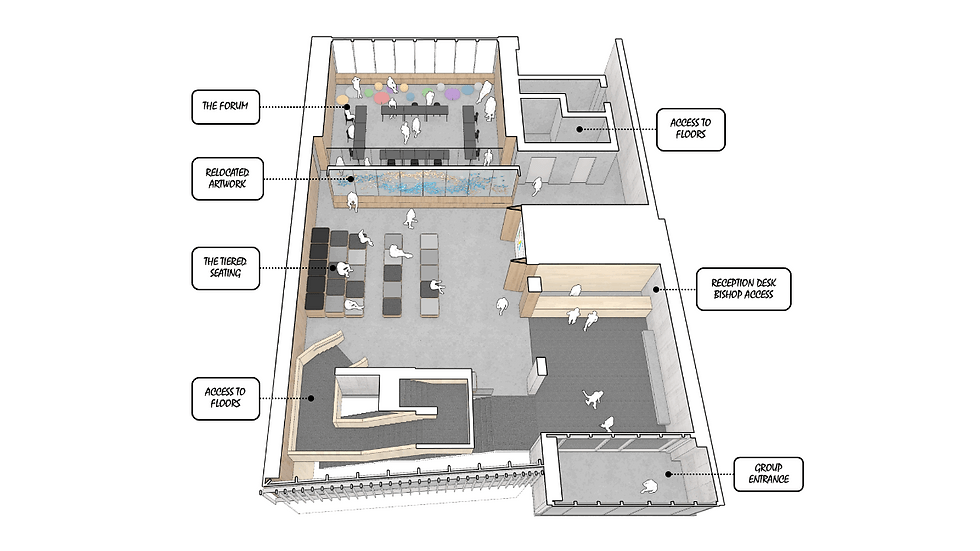
The scheme for the Family Lounge relocates Patrick Beaulieu’s artwork closer to the space, making it accessible at all times, clarifying circulation and enhancing the intimacy of Studio 11. The Lounge Famille benefits from more harmonious proportions, reinforced by a mirrored ceiling, and modular furniture that supports a range of uses, from daily activities to events. The proposal is reversible and low-impact, allowing for optimal activation of both the spaces and the artwork.
The Plage Pivoine installation aims to stimulate foot traffic in the space while addressing furniture and safety concerns through an integrated installation framing the views, the building's architecture, and the artwork “Le Nœud Pivoine”. The scheme proposes a continuous peripheral furniture, the “Pivoine Ribbon”, with varying heights according to function. It defines access points, frames views, secures landings, and provides spaces for relaxation, work, interaction, and events. Simple and elegant, the “Pivoine Ribbon” serves as an understated yet structuring outline for the space, facilitating a more intensive use of Plage Pivoine while preserving the fluidity of spaces and circulation.